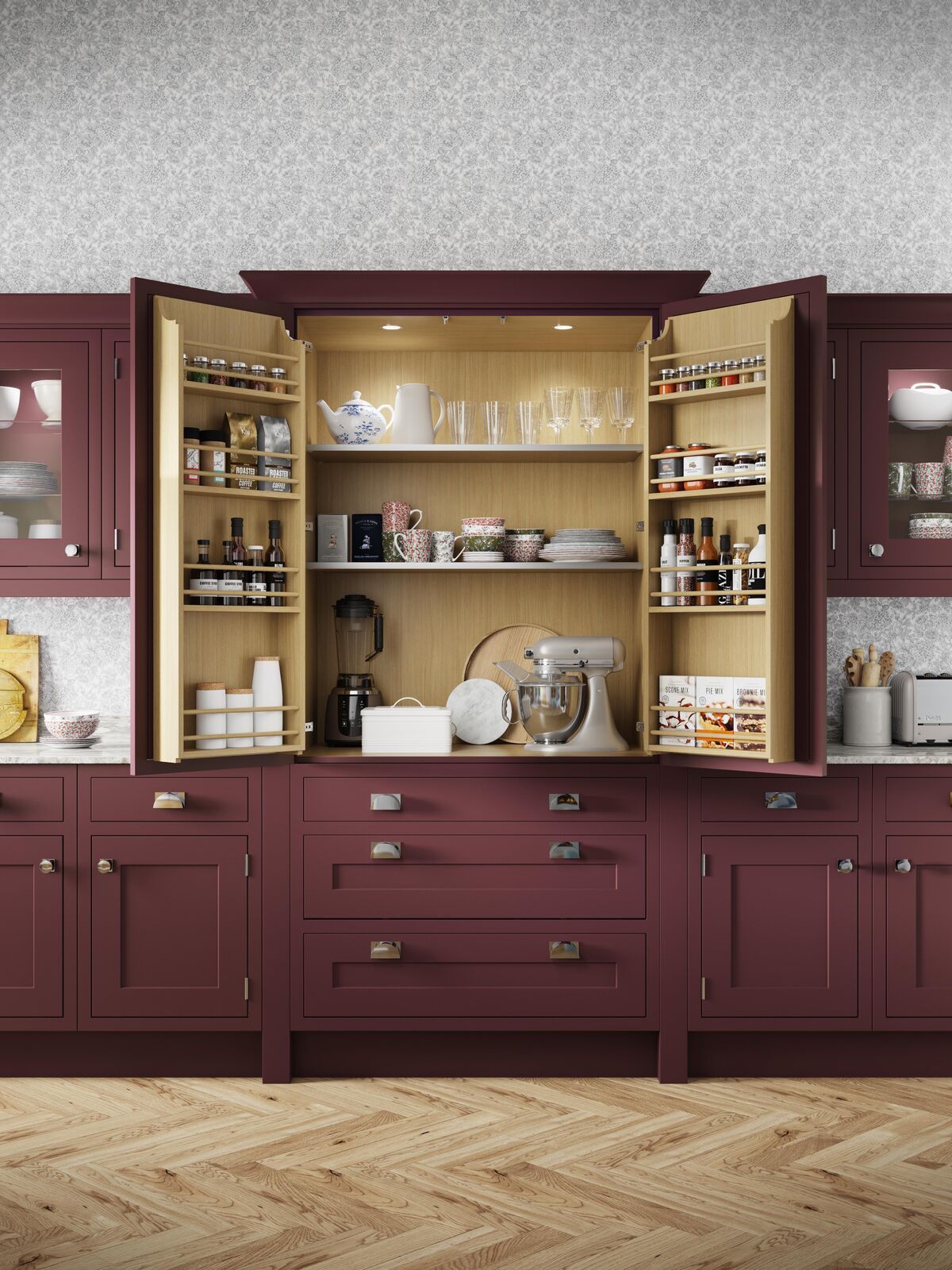
5 Types of Kitchen Lighting That Will Elevate Your Interior Design
When people think about
kitchen design, they usually picture cabinetry, worktops, colours, and appliances first.
Lighting often comes later, sometimes right at the end of the process. In reality, lighting is one of the most powerful tools in interior kitchen design. It shapes how a kitchen looks, how it feels, and how well it works in everyday life.
Whether you are planning a practical family kitchen or an upscale, luxury space, lighting plays a huge role in creating a kitchen that feels considered rather than simply installed. The right lighting can elevate even the most straightforward layout into something high-end, while poor lighting can undo the impact of beautiful materials and finishes.
This article explores five different types of kitchen lighting, what each one does, the benefits they offer, and how they fit into different kitchen styles. It is written with real life in mind, because the best kitchens are not just designed to look good, they are designed to be lived in.
Why Kitchen Lighting Matters More Than You Think
A kitchen is one of the most multifunctional spaces in the home. It is used for cooking, eating, working, entertaining, and relaxing. Good kitchen design recognises this and allows the space to adapt throughout the day. Lighting is what makes that adaptability possible.
In interior kitchen design, lighting influences mood, practicality, and perception. It affects how colours appear, how textures are seen, and how comfortable the space feels at different times. In high-end and luxury kitchens especially, lighting is what gives depth, warmth, and that subtle sense of refinement that defines an upscale finish.
Rather than relying on a single light source, well designed kitchens use layered lighting. This means combining different types of lighting to serve different purposes. Each layer plays a role, and together they create a kitchen that feels balanced, functional, and intentional.
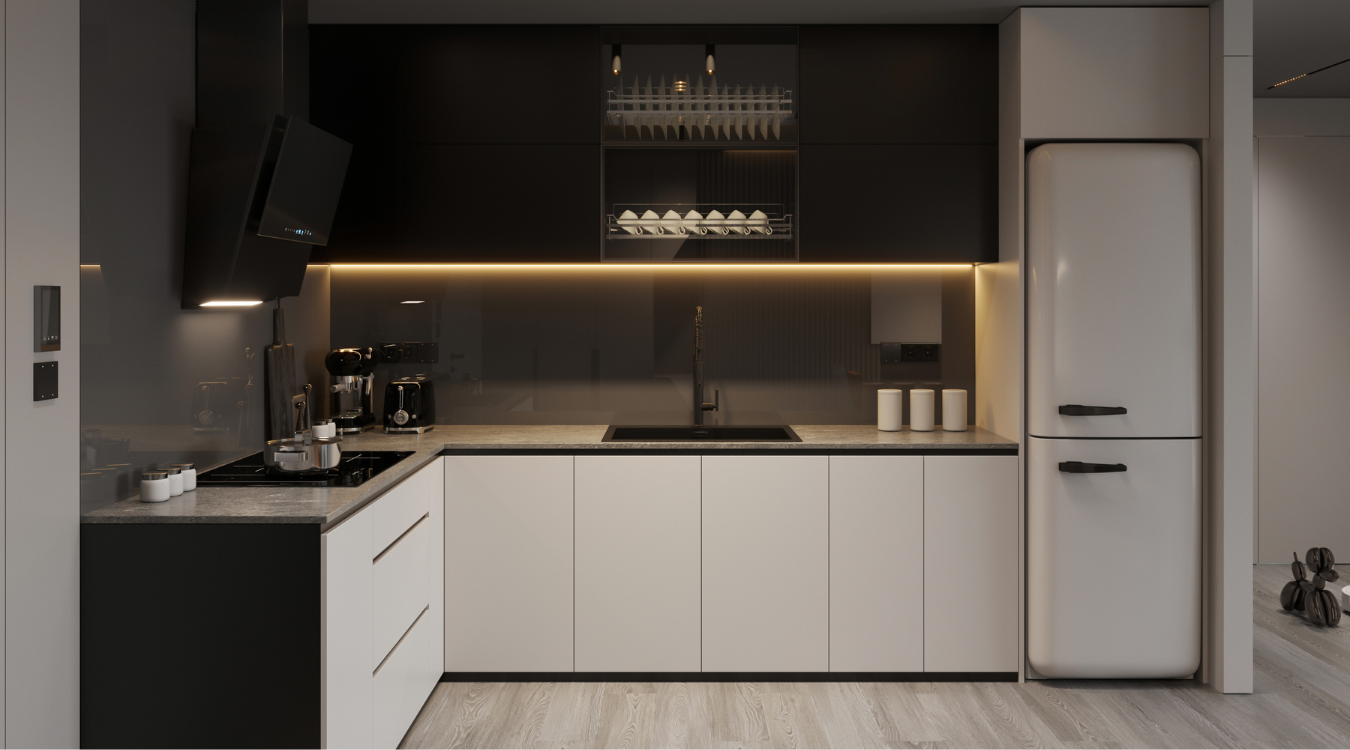
Ambient Lighting: The backbone of every kitchen
Ambient lighting provides the overall illumination in a kitchen. It is the base layer that ensures the space is usable and comfortable. Without it, a kitchen can feel dark, uneven, or visually tiring.
Common forms of ambient lighting include ceiling spotlights, recessed downlights, flush fittings, or carefully positioned pendants that spread light evenly across the room.
In real life, ambient lighting is the lighting you rely on most. It is what you switch on first thing in the morning and last thing at night. In open plan kitchens, it also helps connect the kitchen to surrounding living or dining spaces, creating a cohesive feel.
Ambient lighting is rarely harsh or overly bright. Instead, it is designed to feel soft, controlled, and balanced. Dimmable ambient lighting is particularly valuable, allowing the kitchen to shift from bright and functional during the day to warm and relaxed in the evening.
The 4 Main Benefits of Ambient Lighting:
- Creates a comfortable, welcoming environment
- Ensures even light distribution across the kitchen
- Supports daily use without visual strain
- Helps open plan kitchens feel cohesive
3 Kitchen Styles Ambient Lighting Is Best Suited For:
- Open plan kitchens
- Family kitchens
- High-end kitchens where balance and atmosphere matter
Picture this, it’s early, the kettle is on, lunches are being made, and the kitchen is already busy. Bright ambient lighting helps the space feel energising and organised, setting the tone for the day ahead. When combined with good task lighting, it reduces stress and allows the kitchen to cope with real morning routines rather than just looking good on paper.
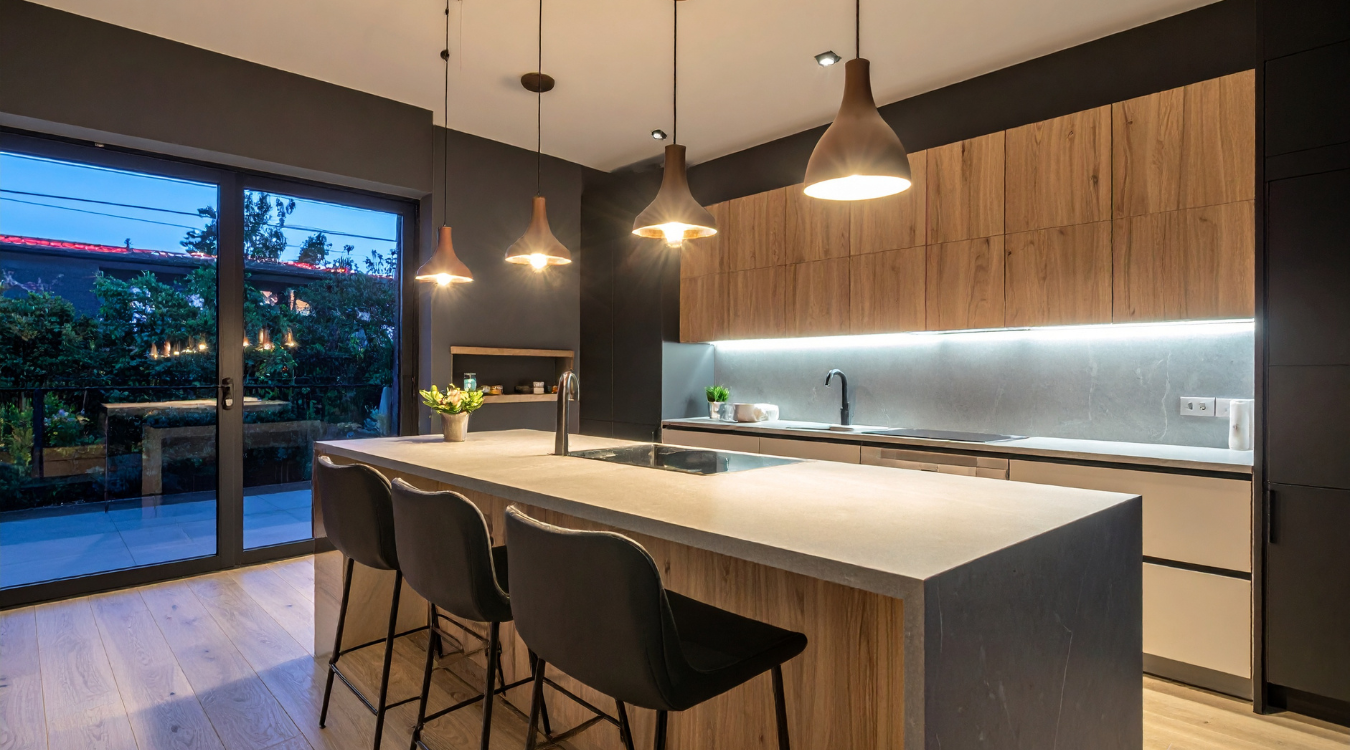
Task Lighting: Designed for real kitchen use
Task lighting is one of the most important yet underestimated elements of kitchen design. It provides focused light for specific activities such as food preparation, cooking, and washing up.
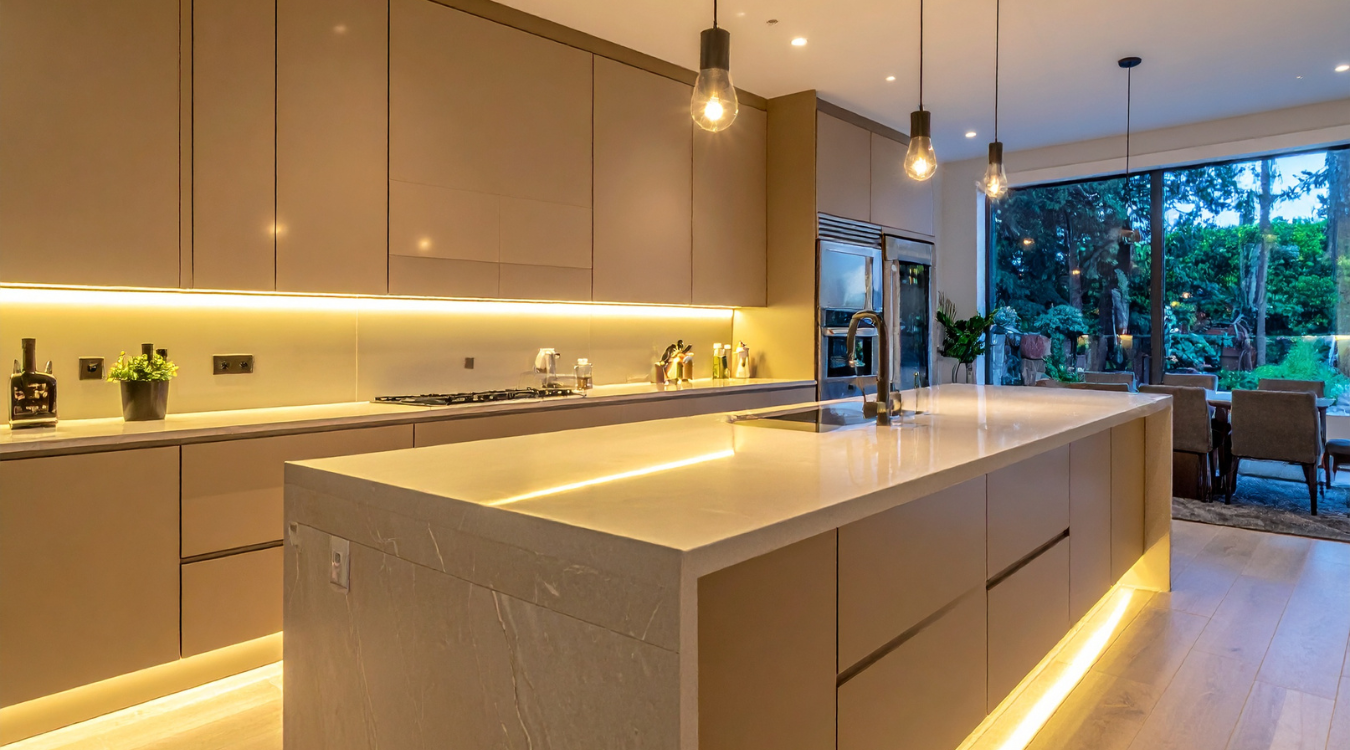
Under cabinet lighting is the most common example of task lighting in a kitchen. It illuminates worktops directly, reducing shadows and improving visibility. Lighting above sinks, hobs, and prep zones also falls into this category.
From a real-life perspective, task lighting is what makes a kitchen comfortable and safe to use. No one enjoys chopping vegetables in poor light or cooking under their own shadow. In both compact and large kitchens, task lighting ensures that beautiful design does not compromise practicality.
In upscale and high-end kitchens, task lighting is often seamlessly integrated so it enhances the design rather than distracting from it. Discreet LED strips and concealed fittings keep the look clean while delivering excellent functionality.
You’re in your kitchen in the evening, with ingredients laid out on the worktop, the hob is on, and the kitchen is in full use. Your task lighting under the cabinets clearly illuminates the prep area, making cooking feel easier and more controlled. You can see colours accurately, work confidently, and move efficiently around the space.
It’s the kind of lighting you rarely notice when it’s done well, but would immediately miss if it wasn’t there. This is where thoughtful kitchen design quietly supports real life, balancing practicality with a clean, high-end finish.
The 4 Main Benefits of Task Lighting
- Improves safety and visibility
- Makes everyday kitchen tasks easier
- Reduces eye strain
- Enhances the usability of work surfaces
3 Kitchen Styles Task Lighting Is Best Suited For:
- All kitchens, without exception
- Smaller kitchens where space works harder
- Luxury kitchens where form and function must work together
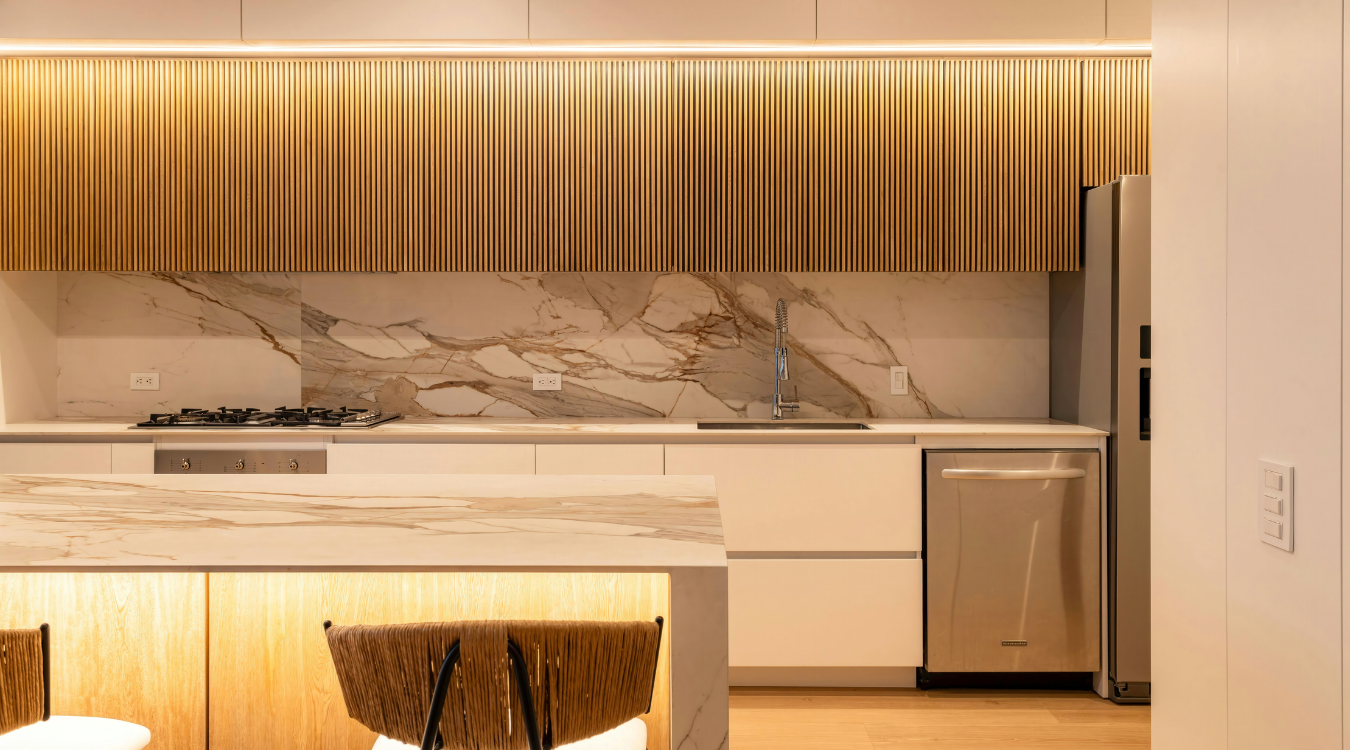
Accent Lighting: Where interior kitchen design comes to life
Accent lighting is what adds depth, warmth, and interest to a kitchen. It highlights features rather than illuminating the entire space, drawing attention to details that might otherwise be overlooked.
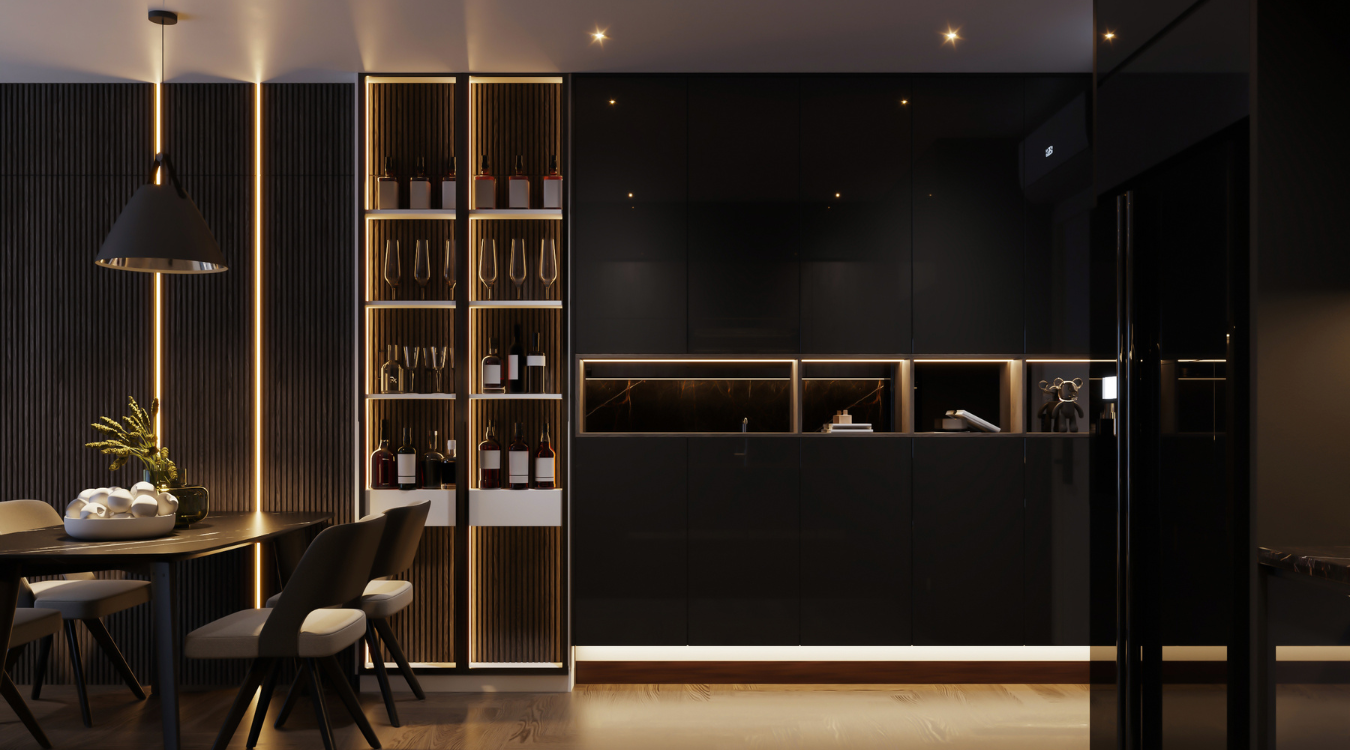
This type of lighting is often used inside glass-fronted cabinets, under open shelving, within plinths, or to highlight textures such as stone, wood, or fluted surfaces.
In darker kitchens, accent lighting is particularly powerful. It prevents the space from feeling flat and adds contrast that makes the kitchen feel layered and rich. In lighter kitchens, it adds softness and creates a calm, inviting atmosphere in the evenings.
From an interior kitchen design perspective, accent lighting is one of the easiest ways to make a kitchen feel more luxurious and high-end without changing the layout or materials.
The 4 Main Benefits of Accent Lighting
- Adds depth and visual interest
- Enhances textures and finishes
- Creates atmosphere and warmth
- Elevates the overall design
3 Kitchen Styles Accent Lighting Is Best Suited For:
- Upscale and luxury kitchens
- Dark or moody kitchen designs
- Kitchens with feature shelving or cabinetry
It’s the end of the day, cooking is finished, the dishwasher is on, and the kitchen shifts from a working space to a place to relax. The main lights are dimmed and accent lighting under shelving or within cabinetry takes over, instantly softening the room. This is where kitchens start to feel calm, warm, and genuinely inviting.
Dark kitchens can feel dramatic and elegant, but without the right lighting they risk feeling heavy. Accent lighting adds contrast and depth, highlighting materials and preventing the space from feeling flat. It is often the difference between a dark kitchen feeling bold and luxury, or closed in and overpowering.
Decorative Lighting: Style, personality, and statement
Decorative lighting is where kitchen design becomes expressive. This includes pendant lights, feature fittings, and statement pieces that contribute to the overall look of the space as much as they provide light.
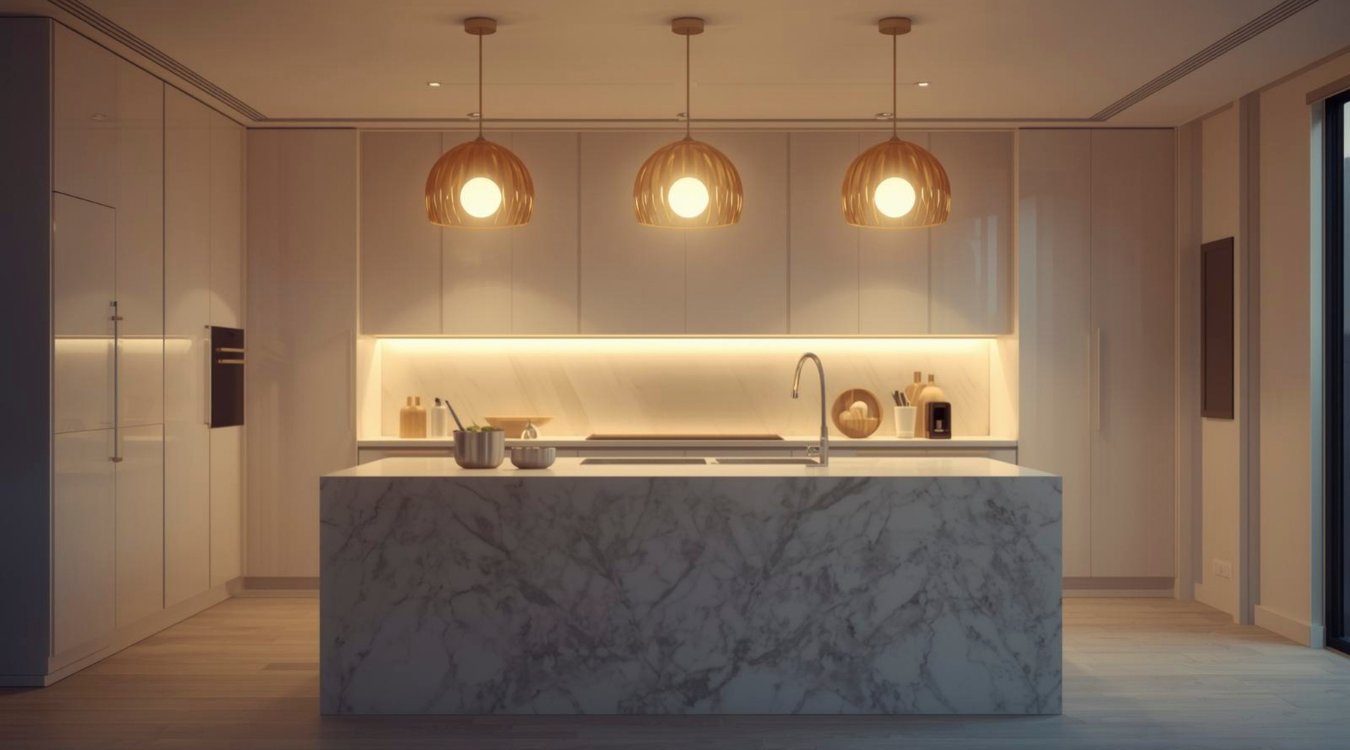
Pendants over kitchen islands or dining areas are especially popular in high-end kitchen design. They help define zones within open plan spaces and act as focal points that draw the eye.
Decorative lighting allows homeowners to inject personality into their kitchen. Whether the style is contemporary, classic, or transitional, the right decorative lighting helps reinforce the overall design direction.
The key is balance. Decorative lighting should complement the other lighting layers rather than replacing them. When combined with strong ambient and task lighting, decorative fittings feel intentional rather than purely decorative.
The 4 Main Benefits of Decorative Lighting
- Adds character and individuality
- Defines zones within open plan kitchens
- Acts as a visual focal point
- Completes the overall design
3 Kitchen Styles Decorative Lighting Is Best Suited For:
- Kitchen islands
- Open plan kitchens
- Luxury and design-led kitchens
You have friends gathered around the island, drinks are poured, and food is being prepared. Decorative pendants create a focal point and help the island feel like the heart of the space, while practical lighting still allows cooking to continue with ease. The kitchen feels social, relaxed, and effortless.
Layered Lighting: The secret behind luxury kitchens
Layered lighting is what separates standard kitchens from truly high-end interior kitchen design. It involves combining ambient, task, accent, and decorative lighting so the kitchen can adapt throughout the day.
In the morning, the kitchen may need to feel bright and energising. During cooking, it needs focused task lighting. In the evening, softer ambient and accent lighting create a relaxed, welcoming atmosphere.
Layered lighting gives homeowners control. It allows the kitchen to feel practical when needed and atmospheric when desired. This flexibility is a defining feature of upscale kitchen design. Rather than lighting being something you notice, it becomes something you feel. The kitchen simply works, whatever the time or occasion.
The 4 Main Benefits of Layered Lighting:
- Allows the kitchen to adapt easily throughout the day
- Balances practical task lighting with atmosphere
- Enhances the overall interior kitchen design
- Creates a more luxury and high-end finish
3 Kitchen Styles Layered Lighting Is Best Suited For:
- Upscale and luxury kitchens
- Open plan living spaces
- Family kitchens designed for everyday use
Homework is spread across the worktop, someone is cooking, and someone else is grabbing a snack. Different lighting layers allow the kitchen to support multiple activities at once, without the space feeling chaotic or uncomfortable.
Whether it’s an early start or a late night snack, softer lighting options allow the kitchen to be used without flooding the space with bright light. This is especially valuable in open plan homes, where lighting affects more than just the kitchen itself.
Rather than lighting being something you notice, it becomes something you feel. The kitchen simply works, whatever the time or occasion.
Lighting and Kitchen Style
Matching lighting to design. Different kitchen styles benefit from different lighting approaches.
Modern kitchens, clean lines and minimal detailing pair well with integrated lighting that feels subtle and architectural. Recessed spotlights, concealed LEDs, and simple pendants work beautifully here.
Traditional or shaker kitchens, lighting can be slightly softer and warmer, enhancing painted finishes and natural materials. Accent lighting helps highlight craftsmanship and detailing.
Dark kitchens benefit enormously from layered lighting. Without it, darker colours can feel heavy. With the right lighting, they feel rich, elegant, and undeniably luxury.
Light kitchens benefit from lighting that adds contrast and warmth, preventing the space from feeling flat or clinical.
Open plan spaces, lighting helps define zones without physical barriers. Pendants over islands, softer lighting near seating areas, and consistent ambient lighting throughout help the kitchen feel connected to the rest of the home without overpowering it.
Lighting as a design tool, not an afterthought
Kitchen lighting is not just about seeing where you are going. It is about how a kitchen feels to live in, day after day. In quality kitchen design, lighting should be planned as carefully as cabinetry and layout.
When done well, lighting enhances every other design decision. It elevates materials, adds depth, and transforms a kitchen into a space that feels thoughtful, upscale, and genuinely high-end.
If you are planning a new kitchen or refining an existing one, consider lighting early. Think about how you use the space, how you want it to feel, and how lighting can support both.
Book a free consultation with us at James James Kitchens and let’s explore what lighting would best suit the interior kitchen design that you have in mind.
You may also want to check out our other blogs
- A Step-by-Step Guide to the Kitchen Renovation Journey: The 8 Stages
- 5 Controversial Kitchen Design Opinions That Might Change How You Think About Your Space
- What Matters Most in a Kitchen Today
- New Year, New Ideas: Designing Kitchens for the Year Ahead
- Kitchen Trends We’re Predicting for 2026
- The Benefits of an Interior Kitchen Designer When Choosing a Luxury Bespoke Kitchen
- Top 10 Questions to Ask Your Kitchen Designer Before You Sign
- 5 Mistakes I Spotted (and Avoided) When Designing My Luxury Kitchen
- Luxury at Home Starts in the Kitchen: Your Smartest Investment